“Climate Change and Cultural Heritage,” in Architectural Conservation in Australia, New Zealand and the Pacific Islands, 2024
I was proud to contribute this overview of the ways that climate change impacts cultural sites and to the textbook, Architectural Conservation in Australia, New Zealand and the Pacific Islands. Australia ICOMOS is an established thought leader on the subject and many Pacific Islands are on the front lines. The book is a comprehensive resource for aspiring and emerging professionals; preview and purchase a copy from Routledge here.
“With green infrastructure, public spaces become key tools in the fight against flooding,” April 2021
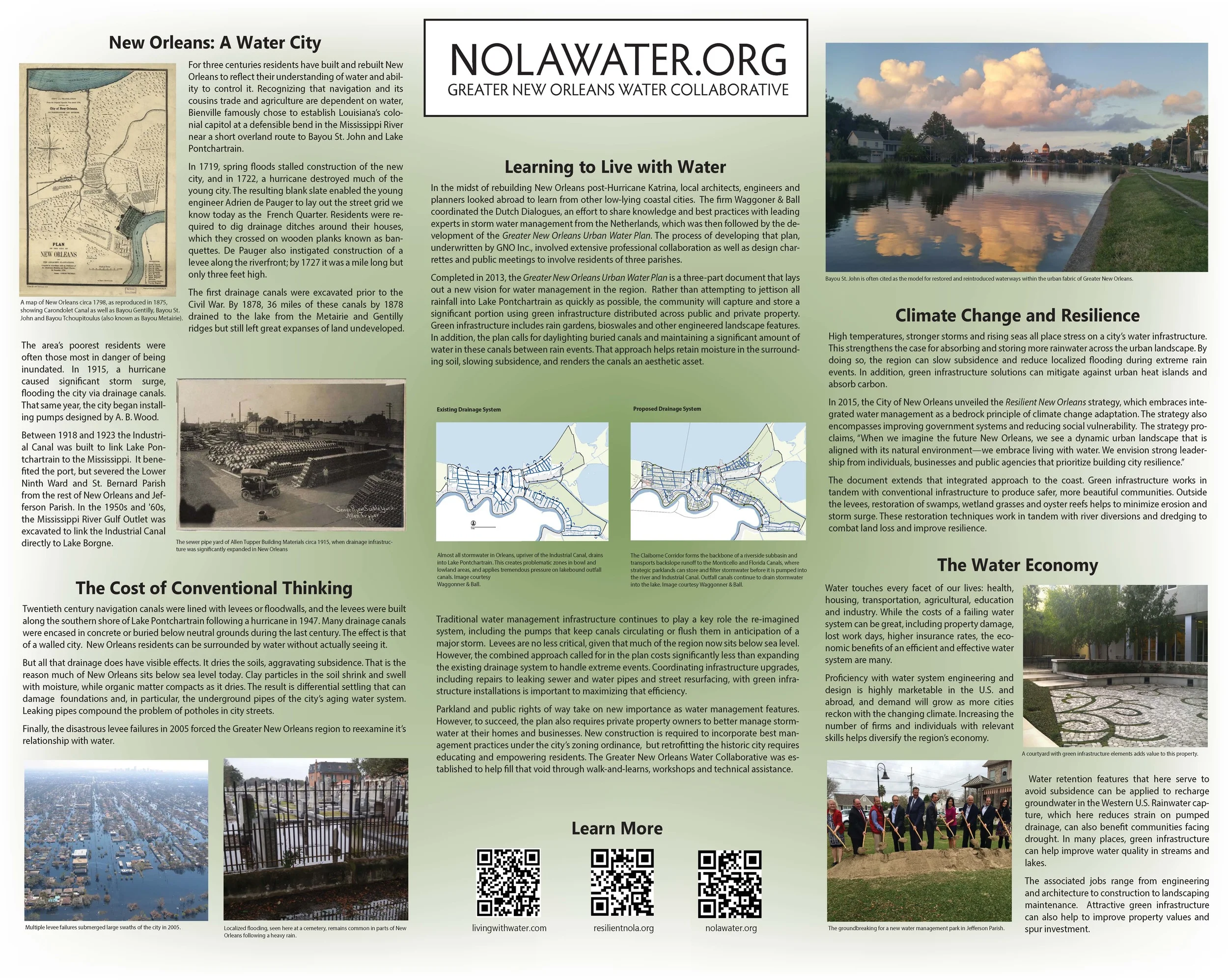
Published in Preservation in Print, this article profiled several municipal green infrastructure projects intended to supplement pumped drainage and slow subsidence in New Orleans. One featured project is located in the neighborhood of Pontchartrain Park, a midcentury suburb purpose-built for African Americans that was listed on the National Register of Historic Places in 2020.
“Saving buildings means saving carbon: how historic preservation fights climate change,” April 2020
This interview with architect and former AIA president Carl Elephante explores the topic of decarbonizing the built environment through energy efficiency and green energy retrofits as well as the importance of avoiding embodied carbon emissions through building reuse.
Assessing the Risks Posed by Environmental and Climatic Change to Immovable Cultural Property, 2015
Completed in December, 2015, This body of research was recognized by the Tulane School of Architecture Faculty with the Award for Outstanding Master's Thesis in Preservation in 2016. The document posits a framework for conducting low-cost vulnerability assessments at historic sites with the goal of improving and altering maintenance practices so as to increase resiliency to looming change. Two pilot sites were examined: Fort Jefferson in the Dry Tortugas, which faces inundation should sea level rise exceed 1 m, and Melrose Plantation in Natchitoches, Louisiana, which lies just above a flood plain in an area where increased average temperatures may increase risk from termites and wildfire.
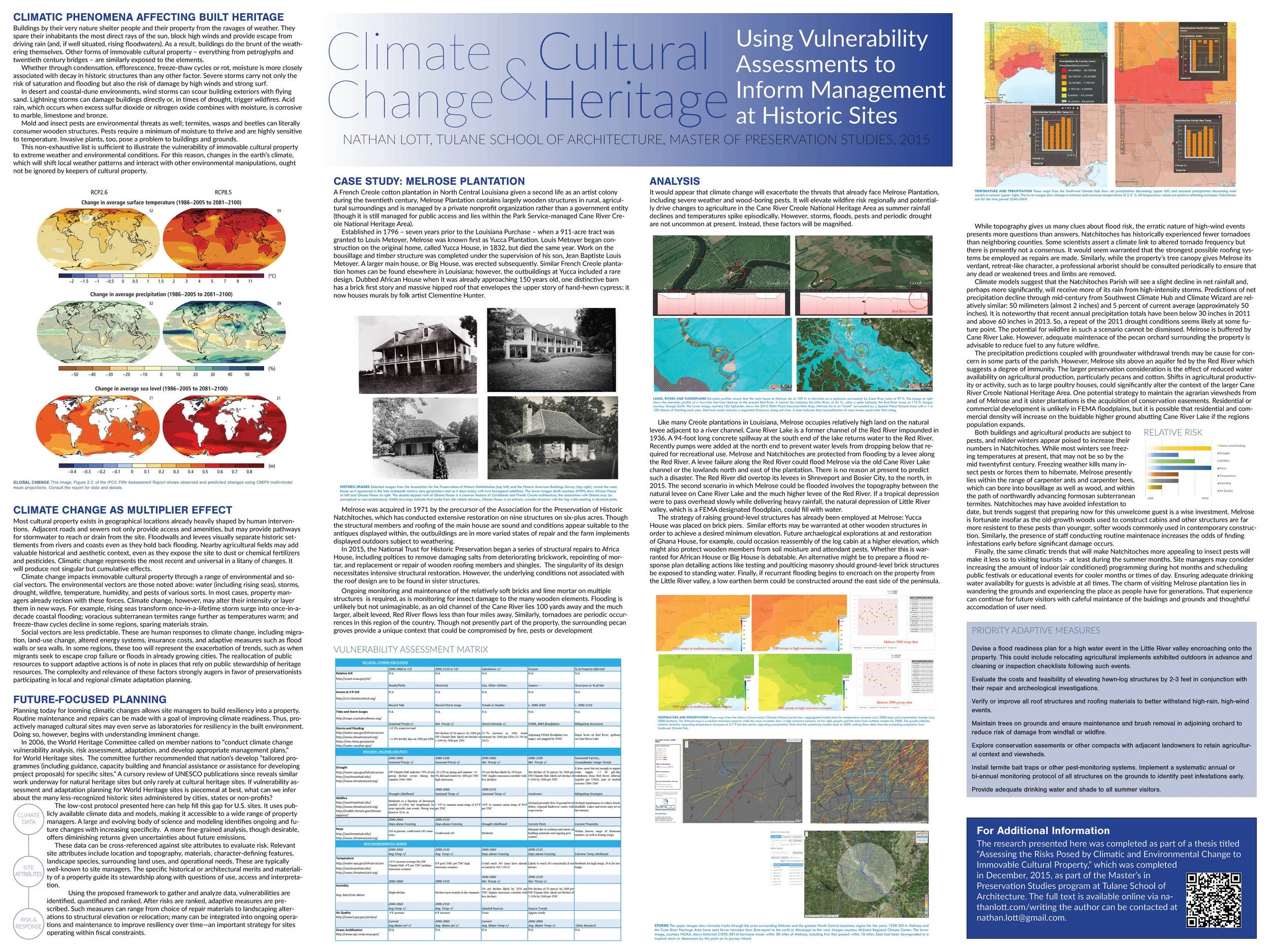
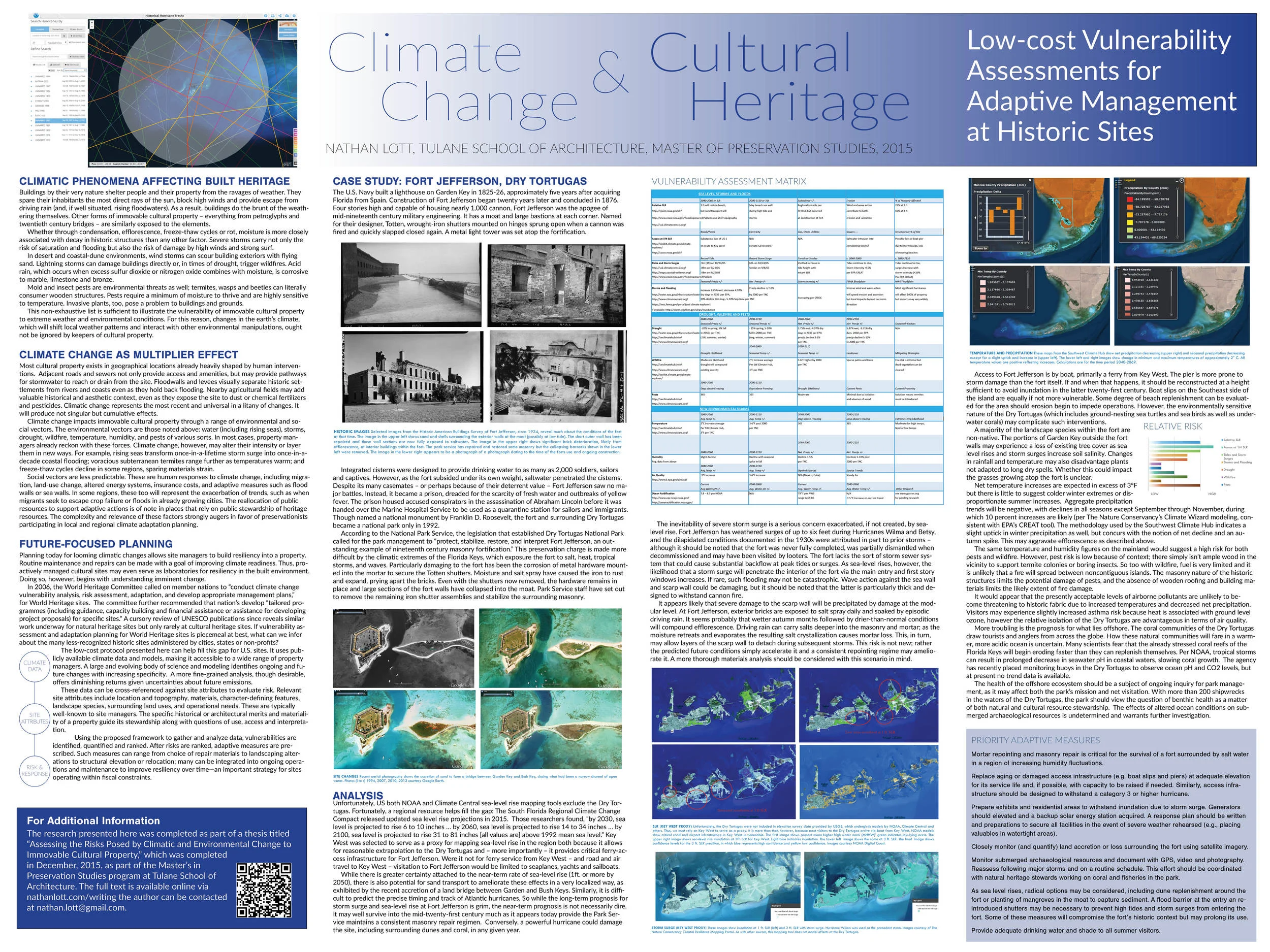
Case Study Poster for RES/CON 2016 (pdf link)
Case Study Poster for Keeping History Above Water (pdf link)
Full Text of Thesis (pdf link)